

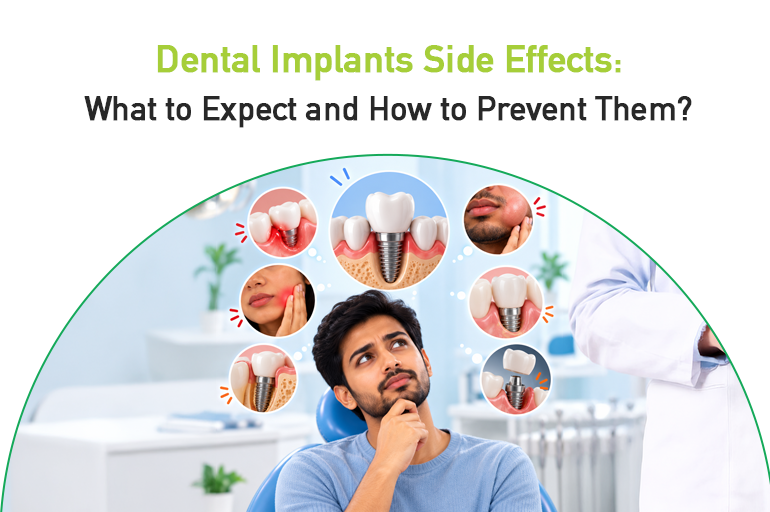
You’re thinking about a dental implant, or you just had one placed. Either way, the questions are the same. Will it hurt? Can it fail? Is this swelling normal?
Most side effects are mild and settle within days: swelling, soreness, bruising, and minor bleeding. Less common problems, like infection or gum inflammation around the implant, can happen. Careful planning, daily cleaning, no smoking, and regular check-ups help prevent many of them.
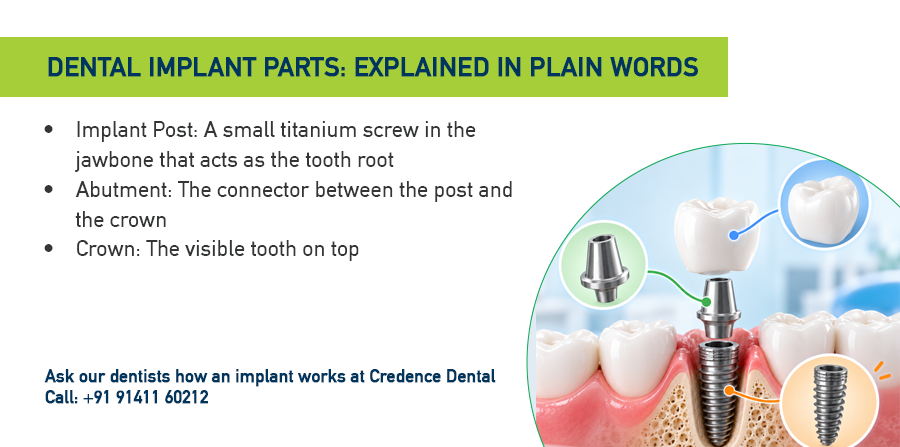
A dental implant is a titanium post that replaces a missing tooth root and supports a crown. Because it’s a surgical treatment, you deserve the full picture, risks included. At Credence Dental, we place dental implants in RR Nagar. Dr Pavan TP, a Prosthodontist and Implantologist, leads the care. We plan every case carefully, and we tell you the risks as plainly as the benefits. This guide covers dental implants side effects: risks, recovery & prevention, in plain words.
What Are the Side Effects of Dental Implants?
Dental implant side effects fall into two groups. Common ones are temporary effects of surgery. Less common ones are complications that need a dentist’s attention. Knowing which group a symptom belongs to tells you whether to wait or call.
Common Side Effects That Settle on Their Own
Surgery bruises the tissue around the implant, and your body responds by healing it. That causes these effects, and they’re temporary:
- Swelling in the gum and cheek
- Bruising on the skin or gum
- Soreness around the implant
- Minor bleeding or oozing
- A numb lip or cheek until the anaesthesia wears off
- Mild jaw stiffness
- Dry mouth or mild drowsiness from your medicines
- Trouble chewing on that side
Less Common Complications
These don’t happen to everyone. Your dentist watches for each one:
- Infection around the implant
- Peri-implantitis, which is infection with bone loss around the implant
- Implant failure, when the implant doesn’t bond with the bone or loosens later
- Gum recession around the implant
- Nerve problems, like tingling or numbness, depending on the site
- Sinus involvement in the upper jaw
- A loose crown screw or a chipped crown
- Delayed healing
Your dentist explains each of these for your case before surgery.
Failure comes in two kinds. Early failure shows up before the crown goes on, when the bone doesn’t hold the implant. Late failure usually follows a long-term problem, like gum infection. Both are uncommon.
Gum problems around implants are more common than most people expect. A large review in the Journal of Periodontology found that about 46 in 100 implant patients get mild gum inflammation around the implant. That’s called peri-implant mucositis. About 21 in 100 develop peri-implantitis over time. Studies define these differently. Regular check-ups catch both early.
Dental Implants Side Effects: Risks, Recovery & Prevention at Each Stage
Healing happens in stages, and each stage feels different. Your pace depends on your bone support, gum health, cleaning habits, and medical history, so your dentist gives you a timeline for your case.
| Stage | What to Expect |
|---|---|
| During surgery | Local anaesthesia numbs the area. You’ll feel pressure, not any pain. |
| First 1 to 3 days | Swelling, soreness, and minor bleeding are most noticeable. Swelling often peaks around day 2 or 3. |
| First week | Soreness and bruising ease. Initial recovery usually takes a few days to 1 week, and 1 to 2 weeks for full arch implants. |
| Weeks to months | Bone grows around the implant, a process called osseointegration. It can take several months before the final crown. A bone graft adds healing time. |
| Getting the crown | Most people adjust to chewing on it within a few days. |
| Long term | The implant needs cleaning every day and regular dental visits. |
When Is It Normal, and When Should You Call Your Dentist?
Normal healing gets better each day. Anything that gets worse needs a call.
| Normal | Call Your Dentist |
|---|---|
| Swelling that peaks, then eases | Swelling that keeps spreading |
| Soreness that fades | Pain that increases |
| Light oozing in the first day or two | Bleeding that doesn’t stop |
| Mild bruising | Fever, pus, or a bad taste that won’t go away |
| A tight feeling when you chew | An implant that feels loose, or a crown that breaks |
Not sure which column you’re in? Call the clinic that placed your implant. If you’re near us, we can check it at our dental clinic in RR Nagar. Trouble breathing or swallowing needs an emergency room right away.
How Can You Reduce Swelling, Pain, and Bleeding After Surgery?
A few simple steps make the first days easier:
- Hold a cold compress on your cheek in short stretches on day one
- Rest with your head raised
- Eat soft, cool food, like curd rice, banana, or khichdi that has cooling effect
- Chew on the other side
- Take the medicines your dentist prescribes
- Keep your follow-up visit
For the first week, avoid:
- Hot chai and very hot food, which can increase bleeding and swelling
- Straws and hard spitting, which can disturb the healing site
- Hard, crunchy food like chakli and nuts near the implant
- Heavy exercise on day one
- Poking the site with your tongue or fingers
How Can You Prevent Infection and Long-Term Implant Problems?
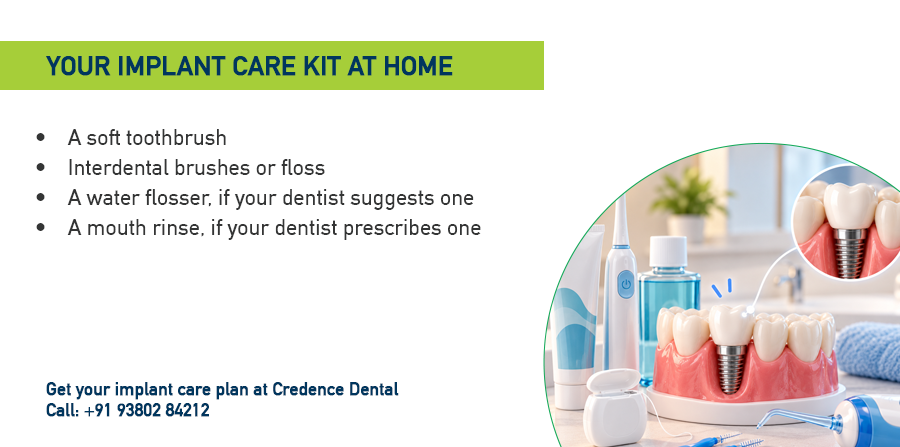
Daily cleaning and regular check-ups protect an implant for years. Implants can’t get cavities, but the gums around them can get inflamed. Red, puffy gums that bleed when you brush are an early warning. Tell your dentist early. At check-ups, your dentist looks at the gums and takes X-rays to check the bone around the implant.
How Should You Clean Around an Implant?
- Brush twice a day, with gentle circles at the gum line.
- Clean between your teeth and around the implant once a day.
- Rinse with water after meals.
- Go gently near the surgery site until your dentist says it has healed.
Who Has a Higher Risk of Implant Problems?
Some habits and health conditions raise the risk. None of them rules out an implant. They mean your dentist plans more carefully.
- Smoking slows healing and raises the risk of failure and gum infection. Quit or cut down before surgery, and stay off tobacco after.
- Uncontrolled diabetes slows healing. Keep your blood sugar controlled and tell your dentist about it.
- Gum disease raises the risk of infection around the implant. Treat it before surgery.
- Poor cleaning lets plaque build up around the implant, which is why the daily routine above matters.
- Teeth grinding (bruxism) puts extra bite pressure on implants and crowns. Ask whether you need a night guard.
How Does Credence Dental Plan Implants to Lower Risk?
Planning starts with a bone and gum check. When we need a 3D view, we advise a CBCT scan, a 3D dental scan. We explain the implant type, the crown material, and the healing steps. We also plan follow-ups to monitor healing and maintenance.
Our periodontist, a gum specialist, and our oral surgeon support gum and surgical needs. Tell us about your medicines and health conditions, so we can plan around them. If you’re looking for dental implants in RR Nagar, you get one team for the whole plan.
You’ll find our dental clinic in RR Nagar at No 1132, 1st Floor, Jawaharlal Nehru Rd, BEML Layout 3rd Stage, RR Nagar, Bengaluru 560098. It’s easy to reach from Rajarajeshwari Nagar, Kengeri, and Banashankari. We offer free parking and lift access.
Book Your Implant Consultation at Credence Dental
A consultation tells you if an implant suits you. Come to our RR Nagar clinic to talk it through. At your first visit:
- We check your teeth, gums, and bone
- We advise an X-ray or scan if you need one
- We give you a diagnosis and your treatment options
- We explain the cost factors before treatment
- We plan your next appointment
Call us at +91 91411 60212 or +91 93802 84212, or write to contact@credencedental.com. We’re open Monday to Saturday, 10:00 am to 8:30 pm, and closed on Sundays.
This content is for patient education only. A dentist must examine your teeth, gums, X-ray or CBCT findings, and medical history before confirming diagnosis or treatment.
Frequently Asked Questions
How long do dental implants last?
Many last for years with good cleaning and regular check-ups. Nobody can promise a set number of years. Bone health, gum care, and habits like smoking all play a part, and a crown may need repair or replacement over time.
Can an implant damage a nerve?
It’s uncommon, and the risk depends on the site in your jaw. When it happens, you notice tingling or numbness that doesn’t fade after the anaesthesia wears off. Tell your dentist at once if you notice it.
Are dental implants safe for older adults?
Age alone doesn’t rule out an implant. Your bone, gum health, and medical history matter more, and your dentist checks all three. Many older adults choose implants because they don’t move like removable dentures.
Will a dental implant look like a natural tooth?
The crown can look close to a natural tooth. Your dentist matches its shape and colour to the teeth around it.
Do I need a bone graft before an implant?
Only if your jawbone is too thin or weak to hold the implant. A bone graft rebuilds that bone first, and it adds healing time. Your dentist decides after examining your jaw and checking a scan.
Where can I get dental implants in RR Nagar?
Credence Dental is a dental clinic in RR Nagar that offers them, led by Dr Pavan TP. Call +91 91411 60212 to book an exam, and we’ll check your bone and gums first.