


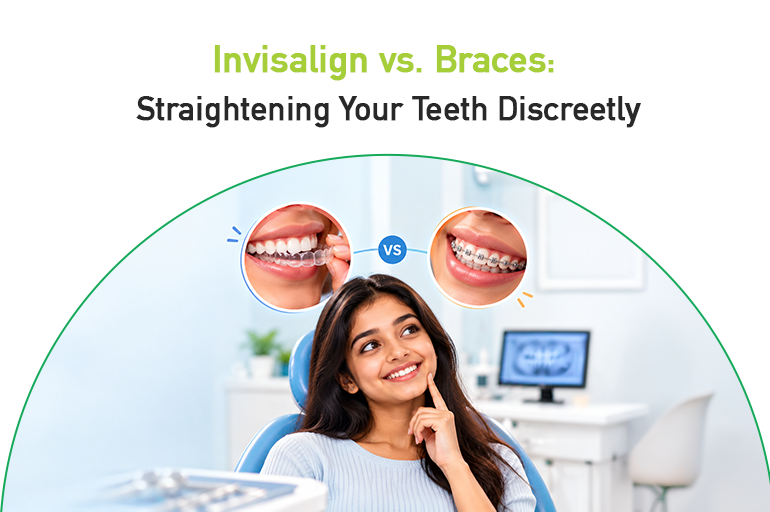
You want straighter teeth, and the Invisalign vs braces question keeps coming up. Both work. They differ in how visible they are and how much effort they ask from you, and they don’t fix exactly the same problems.
- Invisalign, often called invisible braces, uses clear trays that you take out for meals and brushing.
- Braces stay on your teeth around the clock, and they cope with a wider range of bite problems.
An orthodontist decides what fits you after an exam. At Credence Dental, a dental clinic in RR Nagar, we offer both, so we have no reason to steer you toward one. Our dental clinic in RR Nagar hold a 4.9 Google rating, and you can read what our patients say before you book.
Written by our expert orthodontists in RR Nagar, at Credence Dental, read on this blog about Invisalign Vs Braces (The Pros and Cons of Each) to know it all.
What Is the Difference Between Invisalign and Braces?
Invisalign moves your teeth with removable clear trays. Braces use brackets and a wire fixed to your teeth. Both apply steady pressure and both work slowly, so an orthodontist (a dentist who specialises in braces and aligners) plans either one. That one difference shapes your day more than most people expect, because trays come out and brackets don’t.
- With Invisalign, you wear clear plastic trays and swap to a new set every so often. They are removed when you eat or brush.
- With braces, your orthodontist attaches small brackets to your teeth and joins them with a wire. They stay on until treatment ends. You can pick metal, ceramic (tooth coloured), or self ligating braces, which use built in clips instead of tiny rubber bands.
What Problems Can Invisalign and Braces Fix?
Both fix crowded teeth, gaps, and many bite problems. How complex your case is decides which one works better. At your exam, you’ll hear a few terms:
- Crowding means your teeth overlap because they don’t have enough room.
- Spacing means gaps sit between your teeth.
- An overbite means your upper front teeth cover your lower front teeth too much.
- An underbite means your lower teeth sit ahead of your upper teeth.
- A crossbite means your upper and lower teeth don’t meet properly from side to side.
- An open bite means your front teeth don’t touch when your mouth is closed.
Invisalign handles many of these in mild to moderate cases, including teeth that drifted after old braces. Braces also cover the harder ones: twisted (rotated) teeth, protruding teeth, and deep bites.
Invisalign vs Braces: The Pros and Cons of Each
Here’s the complete list of pros and cons of both the teeth straightening options available.
Invisalign Pros and Cons
| Pros | Cons |
|---|---|
| Nearly invisible | Works only if you wear the trays over 22 hours a day |
| You take them out to eat and brush | Doesn’t suit every complex case |
| Easier to keep clean than fixed braces | May need small tooth coloured bumps (attachments) so the trays grip |
| A quick digital scan instead of putty moulds | Teeth can drift back if you skip retainers |
| Works for most adults and teens | Causes mild pressure for a few days with each new tray |
Braces Pros and Cons (Metal, Ceramic, and Self Ligating)
| Pros | Cons |
|---|---|
| Work all day and night, so you have no wear time to track | Stand out more than Invisalign, especially metal braces |
| Fix simple and complex cases, like crowding, gaps, twisted teeth, and bite problems | Cause soreness, mouth sores, and cheek irritation in the first week and after tightening |
| Work for kids, teens, and adults | Make you skip some hard or sticky foods |
| Metal braces usually cost less | Take more effort to clean, and poor cleaning can cause cavities or gum problems |
| Ceramic brackets blend in better than metal | Ceramic brackets can stain or chip if you don’t look after them |
| Self ligating braces, with built in clips, may clean more easily than braces with rubber bands | Retainers are necessary afterward. |
Which Type of Braces Fits You?
Metal braces usually cost the least. Ceramic ones blend in better. Self ligating braces may clean more easily, and they come in both metal and ceramic.
| Type | What to Know |
|---|---|
| Metal | Strong and reliable, and usually the lowest cost. It’s the most visible. |
| Ceramic | Tooth coloured brackets blend in better. They can stain or chip if you don’t care for them. |
| Self ligating | Built in clips replace the tiny rubber bands. They may reduce friction in selected cases and may need fewer rubber band changes. |
Your orthodontist tells you which type suits your teeth, and that advice depends on your bite more than on looks or budget.
Braces vs Invisalign: Which Option Is Most Discreet?
Invisalign wins on looks, and it isn’t close. Clear trays are nearly invisible in photos and on video calls. Ceramic braces come second, since the brackets match your tooth colour, though you’ll still see them up close. Metal braces stand out the most.
If you’re looking at teeth braces in RR Nagar and looks matter to you, ask about ceramic braces. They’re the least visible fixed option.
Which Option Suits Your Teeth and Lifestyle?
Your bite and your daily routine decide it. Put the pros and cons of each next to your own life, and the pattern shows up fast. Then ask yourself which one you’d actually stick with for the whole treatment.
| If You Want | Usually a Better Fit |
|---|---|
| The least visible treatment | Invisalign |
| Treatment you don’t have to manage | Braces |
| Trays you can take out for meals and events | Invisalign |
| Fixed braces that are less visible than metal | Ceramic braces |
| A lower cost option | Metal braces |
| Help with a complex bite or twisted teeth | Often braces, after an exam |
Invisalign tends to suit you when your case is mild to moderate, you can keep the trays in over 22 hours a day, and looks matter most. Braces tend to suit you better when you have a complex bite, heavy crowding, or twisted teeth, or when you’d rather not take trays in and out at every meal.
If you can’t commit to 22 hours, braces serve you better. They keep working whether you remember them or not.
What Should You Think About Before You Choose?
Looks matter, but daily life matters more once treatment starts.
- Can you keep trays in all day? Aligners only work while they’re in your mouth, so you need over 22 hours a day. The first 3 to 4 days of each new tray matter most.
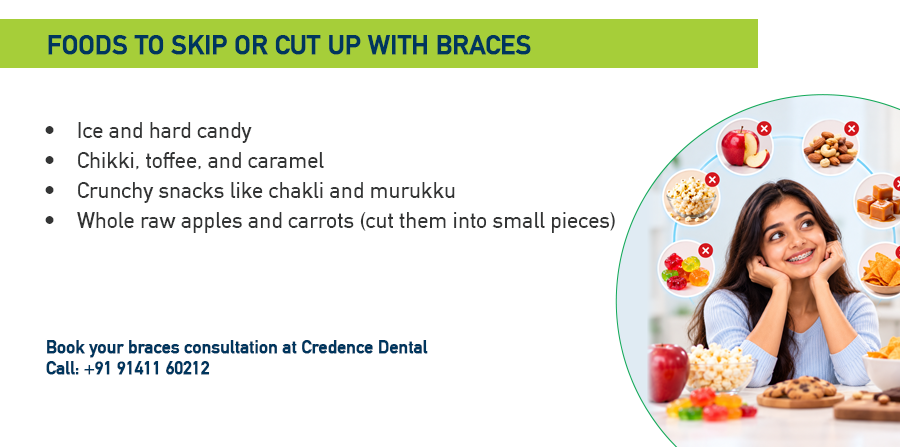
- Do you want to eat whatever you like? With aligners, you take them out for meals. With braces, you skip hard and sticky foods until treatment ends.
- How much cleaning will you do? Aligners come out for brushing and flossing. Braces trap food around the brackets and wires, so cleaning takes longer.
- How will the first week feel? Braces can bring soreness, extra saliva, trouble speaking, and cheek irritation. New aligners press on your teeth for a few days each time.
- Did you wear braces before? Teeth can shift after old braces. Tell your orthodontist, because it can change the plan.
- Are your gums and teeth healthy? Gum problems and other dental issues may need treatment before you start.
- What can you spend? The treatment you pick and how complex your case is decide the cost. Metal braces usually cost less.
- Are you too old? No. Braces work for kids, teens, and adults, and Invisalign suits many adults and teens.
What Questions Should You Ask Your Orthodontist?
Write your questions down before the visit. These cover most of what people want to know:
- Is my case mild, moderate, or complex?
- Will I need any teeth removed?
- Can you walk me through the pros and cons of each option for my teeth?
- How many hours a day do I need to wear trays?
- Will I need attachments, and when?
- How often do I need visits?
- What does the full plan cost, including retainers?
- What happens if my teeth move differently than planned?
What Happens at Your Consultation?
The first visit is an exam. At our dental clinic in RR Nagar, we check your teeth, gums, and bite, scan your teeth digitally, and ask about your goals and daily habits. Then we explain every option that suits your case, with the pros and cons, and give you a clear plan and cost.
How Long Does Treatment Take, and What Affects the Cost?
Treatment type and case complexity decide how long treatment takes and what it costs. People often ask for a number of months right away, and we understand why, but any figure before an exam would be a guess. These things change the answer:
- How far your teeth need to move
- Which type of braces or aligners you choose
- Whether you need extra trays or attachments
- How often you can attend visits
- Whether other dental work has to come first
Metal braces usually cost less. After your visit, we’ll give you a clear plan and cost, and EMI options are available.
What Happens After Treatment Ends?
Retainers, the clear trays or thin wires you wear after treatment, hold your teeth in their new position. Your orthodontist tells you how long and how often to wear them. Skip them and your teeth can drift back, so keep your follow-up visits too.
Looking for Teeth Braces in RR Nagar? How Credence Dental Helps
Our orthodontists offer metal, ceramic, and self ligating braces, along with clear aligners and Invisalign. If you’ve searched for the best dental clinic in RR Nagar, this is what you get at ours:
- A full exam of your teeth, bite, and gums before we suggest anything
- Digital impressions for planning
- Treatment for children, teens, and adults
- A clear plan that explains every option
We’re also the only dental clinic in RR Nagar with the iTero Lumina scanner. It comes from Align Technology, the company behind Invisalign, and it maps your teeth in minutes without putty moulds.
Meet Our Orthodontic Team
- Dr Suhas A S: Orthodontics and Dentofacial Orthopaedics (jaw growth and bite development), with us since we opened
- Dr Vaishnavi NS: Orthodontist for braces, aligners, treatment planning, and bite correction
We’re at No 1132, 1st Floor, Jawaharlal Nehru Rd, BEML Layout 3rd Stage, RR Nagar, Bengaluru 560098. It’s easy to reach us from Rajarajeshwari Nagar, Kengeri, and Banashankari, and we offer free parking and lift access.
Book Your Braces or Invisalign Consultation at Credence Dental
A consultation shows you which option fits your teeth. We check your bite, explain every option, and tell you honestly which one we’d suggest and why.
Call us at +91 91411 60212 or +91 93802 84212, or write to contact@credencedental.com. We’re open Monday to Saturday, 10:00AM to 8:30PM, and closed on Sundays.
This content is for patient education only. A dentist must check your teeth, gums, and bite in person before confirming diagnosis or treatment.
Frequently Asked Questions
Is Invisalign better than braces?
Neither one is right for everyone. Invisalign suits many mild to moderate cases and looks the least visible. Braces treat a wider range of cases, including complex bites. An orthodontist tells you which fits after an exam.
Which hurts more, Invisalign or braces?
Both cause some discomfort. Invisalign gives mild pressure for a few days with each new tray. Braces cause soreness and mouth sores in the first week and after tightening. Everyone’s different, so your experience may vary.
Can I eat normally with Invisalign or braces?
With Invisalign, you take the trays out for meals and eat what you like. With braces, you skip hard and sticky foods for the whole treatment.
Can Invisalign fix everything braces can?
No. Invisalign corrects many cases, but complex bite problems, heavy crowding, or twisted teeth may need braces. An exam confirms this.
Is Invisalign more expensive than braces, and is it worth it?
It can cost more, and you pay for the less visible look and the removable trays. Metal braces usually cost less but show more and limit what you eat. Your case and your budget decide, and after your visit we’ll give you a clear cost plan.
Do I need retainers after Invisalign or braces?
Yes, after both. Don’t skip them: retainers hold your teeth in their new position, and teeth move back without them.
Am I too old for braces?
No. Braces work for kids, teens, and adults. Adults looking at teeth braces in RR Nagar can choose ceramic braces or Invisalign for a less visible look.
How do I choose the best dental clinic in RR Nagar for braces or Invisalign?
Pick a clinic that offers both, checks your bite first, and explains why it favours one option over the other. A clear cost plan after your exam is a good sign too.


