

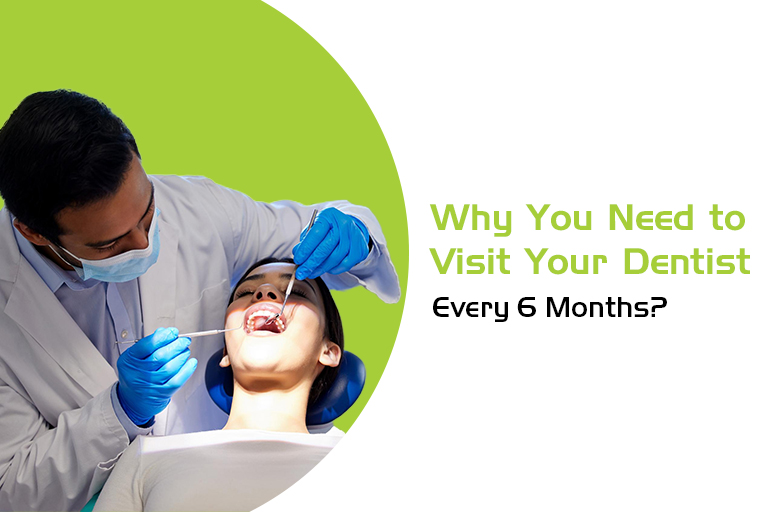
A dental checkup every 6 months gives your dentist enough time to remove tartar, detect decay early, check gum health and spot warning signs before pain starts. Tooth pain, bleeding gums, bad breath, sudden cavities and fear of expensive treatment start when small dental issues stay hidden for too long.
Credence Dental in RR Nagar, Bangalore supports all the Bangalore residents with 15+ years of experience, 9+ expert dentists and 30 plus dental services under one roof. This blog is written by OUR expert dentist from Credence Dental to help you understand why routine checkups matter for long term oral health.
You will learn what changes inside your mouth between visits, what a dental check-up procedure includes and how timely preventive care can save your teeth, time and money. Read on before you postpone your next appointment, because prevention is smarter and much safer than treatment later.
The Real Reason 6-Month Dental Visits Aren’t Just a Suggestion
A dental checkup every 6 months helps prevent cavities, gum disease, oral infections and costly dental treatments before they become serious.
Despite daily brushing, plaque can harden into tartar within 24 to 48 hours. Once tartar forms near the gum line or between teeth, your brush cannot remove it. A dentist removes it with professional tools before it causes gum infection and loosening of the tooth.
Routine checkups also support preventive care in a deeper way. Your dentist checks for tooth decay, gum swelling, mouth ulcers, bite changes and early oral cancer signs. Early oral cancer detection can improve survival chances to nearly 80 to 90 percent, while late detection can reduce it to 40 percent.
Regular visits turn dental care from emergency treatment into proactive dental care. That means better oral health maintenance, fewer painful surprises and fewer large bills.
What Happens in Your Mouth Between Dental Visits?
Your mouth changes every day, even when your teeth look clean in the mirror.
Food particles, saliva minerals, bacteria and missed brushing spots can create plaque buildup in hard-to-reach areas. Over months, these small deposits can trigger gum problems, cavities and bad breath.
The Plaque-to-Tartar Timeline You Can’t Stop at Home
An Essential Dental Checkup removes deposits that daily brushing cannot clear from back molars, gum lines and tight spaces between teeth.
Plaque forms as a sticky bacterial film within 4 to 12 hours after brushing. It sits on tooth surfaces and feeds on food sugars. If plaque stays undisturbed, saliva minerals harden it into tartar, also called calculus, within 24 to 48 hours.
This tartar collects in areas your toothbrush misses:
| Area | Why Tartar Builds Up There |
|---|---|
| Molars | Grooves and crevices trap food easily |
| Gum line | Brush pressure stays too light |
| Between teeth | Floss may not reach every contact point |
| Lower front teeth | Saliva minerals collect faster here |
Even careful brushers can develop tartar. That does not mean you failed. It means your mouth needs professional cleaning at the right time.
The Silent Progression of Gum Disease Without Professional Cleanings
Gum disease can start with mild bleeding and progress to bone loss within months when tartar stays under the gum line.
Here is the usual pattern:
- Plaque irritates the gums within days.
- Tartar forms and traps more bacteria.
- Gingivitis can appear within 2 to 4 weeks.
- Gums may bleed during brushing.
- Swelling and bad breath may increase.
- Periodontitis can begin within 3 to 6 months.
- Bone loss can loosen teeth over time.
- Regular cleaning supports tooth loss prevention.
Six-month visits interrupt this cycle before permanent gum and bone damage starts.
How Does Early Detection Save Your Teeth And Your Wallet?
Early detection helps your dentist fix small problems before they need root canals, extractions, implants or gum surgery.
A small cavity may not hurt for months. Dentists can spot decay on X-ray screening 6 to 12 months before pain begins. Visual inspection also helps identify cracks, worn fillings, enamel stains and gum changes early.
| Problem Detected Early | Cost of Late Treatment |
|---|---|
| Small cavity filling can cost ₹1,500 to ₹3,000 | Root canal can cost ₹8,000 to ₹15,000 |
| Mild gum disease may improve with cleaning | Advanced gum disease may need surgery |
| Early decay can need a simple filling | Extraction and implant can cost ₹40,000 to ₹1,00,000 |
| Small filling crack can be repaired | Deep decay under filling may need RCT |
| Early oral lesion can get reviewed fast | Late oral cancer care can become complex |
What Professional Cleaning Actually Removes That Brushing Cannot?
A Dental check-up procedure removes hardened tartar, surface stains and bacterial deposits from areas your toothbrush cannot reach.
A professional cleaning takes 30 to 45 minutes. It should feel like mild sensitivity, not sharp pain.
- Scaling removes tartar above and at the gum line.
- Ultrasonic scalers vibrate at 25,000 to 50,000 Hz to loosen hard deposits.
- Manual curettes clean stubborn calculus from tight areas.
- Polishing removes surface stains from tea, coffee and food pigments.
- Smooth enamel makes plaque less likely to stick.
- Fluoride treatment can help strengthen enamel after cleaning.
- Your dentist may suggest better brushing angles for problem areas.
This procedure does more than make teeth look clean. It reduces bacteria, protects gums and helps your mouth stay fresh for longer.
How Your Oral Health Affects Your Entire Body?
Your mouth can affect your overall health because gum bacteria can enter the bloodstream through the gaps between your teeth and gums when gums are bleeding or inflamed.
Research links periodontitis with higher cardiovascular disease risk. People with advanced gum disease may face a 2 to 3 times higher risk of heart attack or stroke. Diabetes also has a strong gums-body link. Gum disease can make blood sugar harder to control and high sugar levels can worsen gum infection.
A best dentist in RR Nagar search should lead you to care that checks more than teeth. During routine visits, dentists may notice signs of vitamin deficiency, diabetes, immune disorders, mouth ulcers or dry mouth issues.
Good oral health begins with clean gums, fewer bacteria in bloodstream and timely care.
Beyond Cleaning: What Else Your Dentist Checks Every 6 Months?
People search for a dentist near me when pain starts. A better habit is to visit before pain begins.
Your dentist checks:
- Gum pocket depth, where 3 mm or less shows healthy gums.
- Gum pockets of 4 mm or more, which may signal gum disease.
- Bite evaluation for uneven pressure on teeth.
- TMJ screening for jaw clicks, pain or stiffness.
- Teeth grinding damage on enamel edges.
- Filling inspection for cracks or leakage.
- Crown and bridge fit around the margins.
- Tongue, cheeks and roof of mouth for ulcers or patches.
- Jaw and neck lymph nodes for swelling.
- Personalised tips for your exact weak spots.
This makes your visit a full oral health review, not just a cleaning session.
Get Expert Preventive Care at Credence Dental Bangalore
A 6 month dental visit protects you from cavities, tartar, gum disease, oral cancer risk, weak fillings, bite issues and expensive emergency treatment. Credence Dental supports preventive dentistry with digital X-rays, intraoral cameras, gentle scaling, family dental care, cosmetic dentistry, implants, root canal treatment, orthodontics, pediatric dentistry and wisdom tooth care.
The clinic also offers ethical treatment planning, clear communication, a hygienic setup and easy access in RR Nagar and Rajarajeshwari Nagar. Routine visits help you keep your natural teeth for longer.
Struggling with hidden dental issues? Get expert preventive care at Credence Dental. Call +91-91411 60212 right now.
FAQs
Is a 6-month dental checkup necessary if I have no pain?
Yes, because many dental problems go unnoticed. A routine check helps detect hidden decay, gum issues, and early warning signs before symptoms appear.
Can children also follow the 6-month dental visit rule?
Yes, children benefit greatly from routine visits. Regular checkups help track tooth development, prevent cavities, and build good oral hygiene habits early.
How long should I wait after a dental treatment to schedule my next checkup?
Most patients should still follow the 6-month cycle. Your dentist may suggest an earlier visit if you have ongoing treatment or specific oral concerns.
Do dental checkups include advice for daily oral care?
Yes, dentists guide you on brushing technique, flossing habits, and diet choices. This personalised advice helps improve your daily oral health routine.
What should I do before going for a dental checkup?
Brush and floss your teeth before the visit. Carry your previous dental records if available, and note any discomfort or changes you have noticed.