

Bangalore has been experiencing monsoon for weeks now. And this monsoon, you’ve found that your gums bleed more than they did in April, hot chai makes one tooth twinge, and the check up you booked before the rains has moved twice, both times because the roads flooded.
None of that is a coincidence. The rain itself doesn’t harm your teeth. It changes what you snack on, how much water you drink, and how easily you get to a dentist.
At Credence Dental in RR Nagar, we see the same handful of problems walk in every monsoon, from bleeding gums to a filling that finally gives way. Most of it comes down to habits you can fix under preventive dentistry and gum care, before they turn into a bigger appointment.
Below are essential dental care tips for the monsoon season, seven of them, each tied to something the rains actually change.
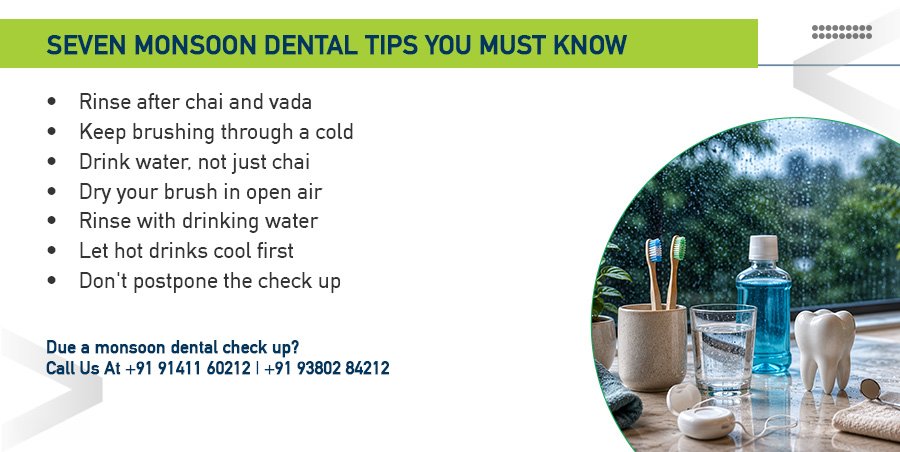
Tip 1: Rinse After Chai And Fried Snacks, But Don’t Brush Right Away
Swill plain water around your mouth after the snack, then wait about half an hour before you brush.
Rain traffic adds an hour to a Bangalore commute, and that hour often ends at a snack stall. Filter coffee with sugar, a vada, maybe a bajji. Three or four times a week through the season.
Each sugary bite feeds the bacteria in your mouth, and they turn that sugar into acid. The acid softens your enamel, the hard outer layer of the tooth, for a while after you eat.
Brushing right then scrubs the softened enamel and wears it down faster. Water washes the sugar off without the scrubbing.
Tip 2: Keep Brushing Through A Monsoon Cold, Even If Gums Bleed
Bleeding gums need cleaning, not avoiding. Most people do the opposite and skip the sore spot, which makes it worse within days.
Colds and flu peak in these months. A blocked nose makes you breathe through your mouth all night, and that dries out your gums. Dry, irritated gums bleed at the lightest touch.
Bleeding while brushing usually means gingivitis, the early stage of gum disease. Your gums turn red, swell up, and bleed easily. Plaque, the soft sticky film of germs on your teeth, keeps this going if it isn’t cleaned off at the gum line.
So brush the area gently rather than around it. Use a soft brush, small circles at the gum line, and keep a glass of water by the bed. Bleeding that continues past a week needsgum care, not another week of hoping.
Tip 3: Drink Water, Not Just More Chai
Keep your water going even when the cool weather kills your thirst.
Most people drink less water in the rains and make up for it with chai and coffee. Your saliva drops along with your water intake, and saliva does more than most people realise. It washes food away and cancels out the acid bacteria make.
Less saliva means food sits on your teeth longer, acid lasts longer, and plaque builds up faster. Add sugar to every cup, and you’ve swapped your best natural defence for a bigger decay risk.
This is what actually changes in the monsoon. Not the humidity in the air, but the water that stops reaching your mouth.
Tip 4: Store Your Toothbrush In Open Air, Not A Closed Cupboard
Stand it upright somewhere it can dry properly between uses.
This is the one monsoon claim about humidity that’s actually true. A brush shut inside a damp bathroom cupboard never fully dries. A brush head that stays wet all the time grows more germs than one that dries between uses, so it’s worth avoiding.
Simple habits cover it:
- Rinse the head under running water and shake it out after brushing
- Store it upright, in open air, away from the toilet
- Keep brushes apart so heads don’t touch
- Replace every three months, or sooner if the bristles splay
- Never share a brush, including with your child
Tip 5: Rinse Only With Water You Would Drink
If you wouldn’t drink it, don’t put it in your mouth.
Water can carry more germs during the rains, and tap water quality drops in many parts of Bangalore. Use boiled and cooled water, or filtered water, for any salt water rinse.
This matters most when your mouth is already healing. After a tooth extraction, a mouth ulcer, or gum treatment, the open tissue is far more sensitive than healthy gum, and germs cause more trouble there.
If your dentist has told you to rinse with warm salt water after treatment, use the same safe water for that too.
Tip 6: Let Hot Drinks Cool If Your Teeth Twinge
Give the chai a few minutes before the first sip, and see whether the twinge settles.
The chai didn’t change. Your tooth did, some time ago. Sensitivity happens when the root of the tooth is exposed, or the enamel has worn thin, so heat and cold reach the nerve inside.
Monsoon just means you drink more hot chai, so you feel it more often.
A few things help. Let drinks cool to warm before you drink them. Switch to a soft brush and stop scrubbing side to side, since hard brushing pushes your gums back and exposes more of the root. A desensitising toothpaste, used every day for a few weeks, blocks the sensation for many people.
One thing to watch for. A quick jolt that fades in seconds is usually just sensitivity. Pain that stays after you finish the cup is a different problem, and it needs a dentist to look at it.
Tip 7: Don’t Postpone The Check Up Because Of The Rain
Book it now rather than in October.
Rain and traffic are the real reason appointments slip in Bangalore, not because people don’t care. Nobody wants to cross the city in a downpour for a routine cleaning, so the appointment moves, then moves again.
But waiting changes what treatment you need. A small cavity that only needed a filling in July can reach the nerve by October and need a root canal instead. Bleeding gums can harden into tartar, and a simple scaling and polishing, professional cleaning that removes plaque and hardened deposits, turns into a deeper clean below the gum line.
A routine check up takes far less time than the traffic you’re avoiding. Any dental clinic in Bangalore can do a seasonal check, and our dentist in Bangalore page explains what your first visit involves.
Which Monsoon Symptoms Should Not Wait?
Six signs, and none of them improve by waiting for clear weather.
- Gums bleeding at every single brush
- Swelling in the face, cheek, or jaw
- Pain that wakes you at night
- A mouth ulcer that hasn’t healed in two weeks
- A broken tooth, or a filling that came out
- A bad taste or discharge from a tooth or gum
Swelling in your face, or pain bad enough to wake you up, needs the fastest response. Both often mean an infection is spreading.
Planning to look up a dental hospital in Bangalore during heavy rain? Call ahead first. A clinic can handle most dental problems, and one phone call tells you whether to travel today or wait for the rain to ease.
What Should You Do Next?
Dental problems don’t pause for the weather. They grow quietly across a season, and a few postponed months separate a filling from a root canal.
Pick the one tip you keep skipping. For most people it’s the last one. If you’re already looking for a dentist in Bangalore and putting off the call until the rain stops, that’s the habit worth breaking this week.
Book Your Monsoon Oral Check Up At Credence Dental
A seasonal check up takes one short visit. We look at your gums, check for early decay, and clean off what brushing can’t reach.
We bring 9+ expert dentists and 15+ years of experience to RR Nagar. Visit us at Credence Dental, BEML Layout 3rd Stage, RR Nagar, Bengaluru 560098, or call us on +91 91411 60212 or +91 93802 84212 to book your appointment. We’re open Monday to Saturday, 10:00 am to 8:30 pm, and closed on Sunday.
Frequently Asked Questions
Does Cold Weather Cause Tooth Pain?
Cool weather doesn’t damage teeth, but it makes existing sensitivity noticeable. Exposed roots and worn enamel react to temperature, and you meet more hot drinks in these months. Pain that lasts after the drink needs a dentist.
Should You Brush With Warm Water During Monsoon?
Warm water feels more comfortable if your teeth are sensitive, and it does no harm. It won’t clean better than cold water. Use water you would drink, and focus on technique instead of temperature.
Do Mouth Ulcers Increase In The Rainy Season?
Many people notice more ulcers during seasonal illness, often alongside a cold, fever, or a run of poor sleep. Most heal within two weeks on their own. One that stays longer than that needs examining.
Is Bad Breath Worse In Humid Weather?
Usually it’s the routine, not the weather. Less water means less saliva, and a drier mouth holds odour longer. Clean your tongue daily and keep water going. Breath that returns within hours points to gums or tartar.
How Often Should You Get A Dental Check Up?
Twice a year suits most adults, and a monsoon visit fits neatly into that. Go more often if you have gum disease, several fillings, implants, or braces, or if your dentist has asked you to.
Where Can You Find A Dentist Near Me During Heavy Rain? Call before you travel. People type dentist near me during a downpour and then drive out blind. Phone the nearest clinic first and describe the symptom. They will tell you whether to come in today or wait, which saves a wasted trip across a flooded city.