

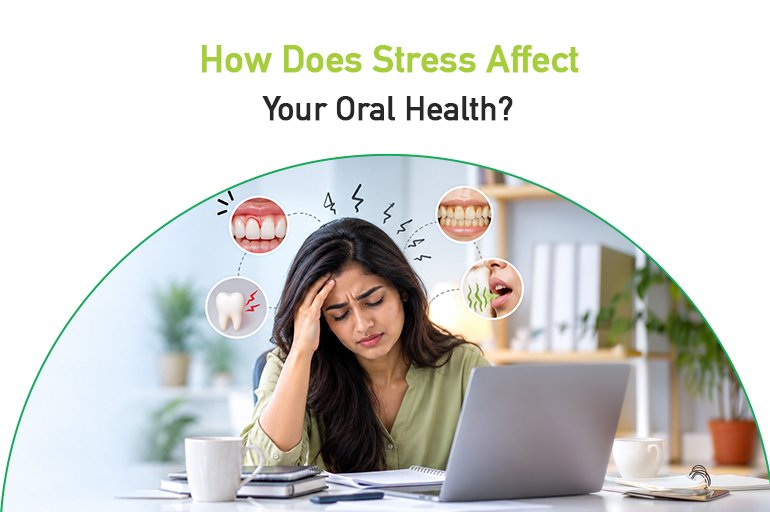
You’re experiencing sharp jaw pain today. Your gums are bleeding while you brush. There’s a small mouth ulcer that wasn’t there yesterday. If work or life has been stressful lately, these symptoms aren’t random.
Stress changes your mouth in real, physical ways. It makes you grind your teeth at night, weakens your gums, dries out your mouth, and pushes brushing and flossing down your priority list. These are some of the clearest ways stress can affect your teeth, and most people don’t connect the dots until a dentist points it out.
At Credence Dental in RR Nagar, our expert general dentists and periodontists see these patterns often, backed by 15+ years of clinic experience, especially during exam season, festival rush, or a demanding work stretch. Here’s what’s actually happening in your mouth when stress runs high, and when it’s worth getting checked.
Does Stress Really Affect Your Oral Health?
Yes. Stress tenses your jaw muscles, weakens your immune response, and reduces your saliva flow, and each of these shows up in your mouth before it shows up anywhere else. These are some of the clearest ways stress can affect your teeth and gums.
How Stress Causes Teeth Grinding and Jaw Pain?
You clench your jaw during the day without noticing it, or grind your teeth at night while you sleep. Dentists call this bruxism, the clinical term for teeth grinding or clenching, and stress is one of its most common triggers.
Grinding wears down your enamel, chips your teeth, and strains your jaw joint, called the TMJ. This joint connects your jawbone to your skull and lets you chew, speak, and yawn.
Watch for:
- A sore or tight jaw when you wake up
- Headaches near your temples in the morning
- A clicking sound when you chew
- Your partner mentioning grinding sounds at night, since bruxism is often loudest for the person sleeping next to you, not you
How Stress Weakens Your Gums?
Chronic stress raises your cortisol levels and weakens your immune response. A weaker immune system struggles to fight the bacteria that cause gum disease. Gingivitis, early gum swelling or bleeding, can progress to periodontitis, a more advanced form of gum disease, if you don’t catch it in time.
Don’t brush off bleeding gums during a stressful period. You might assume you’re just brushing too hard, but persistent bleeding, even mild bleeding, is one of the earliest signs your gums need attention.
How Stress Causes Dry Mouth?
Stress reduces your saliva production, and that leads to dry mouth. Saliva does more work than most people realise: it washes away food particles and neutralises the acids that build up after you eat. When you produce less saliva, you face more risk of cavities and gum irritation, since less natural rinsing happens throughout the day.
You might also breathe through your mouth when you’re anxious, which dries things out further. If you’re waking up with a dry, sticky feeling in your mouth more often than usual, consider stress as a cause.
How Stress Leads to Neglected Oral Hygiene?
When you’re overwhelmed, brushing for two minutes or flossing before bed is often the first habit you drop. Stress also pulls you toward sugary comfort food, extra caffeine, or skipped meals, and all of that affects your mouth over time. None of this is a character flaw. It’s just what stress does to routine.
How Stress Can Trigger Mouth Ulcers?
Stress is a commonly reported trigger for mouth ulcers, small, painful sores inside the cheek, lip, or on the tongue. They usually clear up on their own within a week or two. If an ulcer lasts longer than two weeks, keeps recurring, or comes with a fever, get it checked, since not every mouth sore is stress-related.
Is This Just Stress, or a Dental Problem That Needs Treatment?
It can be both. Stress is often the trigger, but the wear, inflammation, or dryness it causes are real dental issues that need a dentist’s attention, not just less stress in your life. Jaw pain can come from your teeth, muscles, joints, grinding, or other causes, so a dental evaluation helps you find out what’s actually going on instead of assuming it will pass.
You might wait to see if the stress passes on its own. But grinding and gum changes don’t reverse themselves once they’ve started. Your stress might ease next month, while a worn tooth or a receding gum line stays exactly where it is.
What Can a Dentist Actually Do About Stress-Related Dental Issues?
A dentist checks your bite, gums, and jaw during a routine visit and treats what stress has already caused. During a check, a dentist looks for flattened or chipped edges on your back teeth, a telltale sign of grinding, tenderness around the jaw muscles, and gum tissue that bleeds on light probing rather than only when you brush hard. Depending on what’s found, treatment looks like this:
- For Grinding: A dentist fits you with a night guard, a protective appliance you wear during sleep to reduce damage from grinding. It doesn’t cure the habit itself. It protects your teeth while the habit is there.
- For Gum Changes: Scaling, a professional cleaning that removes plaque and tartar, is usually the first step, along with a closer look at whether gingivitis has started.
- For Dry Mouth: A dentist checks whether it’s linked to stress, medication, or something else, since the cause changes what actually helps.
Alongside dental care, managing the stress itself, through better sleep, regular breaks, or simply naming what’s stressing you out, helps your whole body, not just your mouth. A dentist treats what’s already happened. You reduce the stress to stop it from happening again.
What You Can Do Yourself Between Visits?
- Keep water nearby and sip through the day if your mouth feels dry.
- Notice when you’re clenching your jaw during the day and consciously relax it.
- Skip chewing on pens, ice, or hard sweets when you’re stressed, since this adds to jaw strain.
- Stick to your usual brushing and flossing routine, even on your busiest days.
- Mention grinding or jaw pain at your next checkup, rather than waiting for it to feel serious.
When Should You Visit a Dental Clinic in Bangalore for Stress-Related Symptoms?
Book a visit if jaw pain, grinding, or bleeding gums last more than a week or two, even if you think the stress will pass on its own. Waiting doesn’t fix worn enamel or advancing gum disease, and you’ll usually find it simpler and gentler to catch it early. Comparing dental clinics in Bangalore can feel like one more task when you’re already stressed, so keep it simple: pick one that treats what’s happening in your mouth as connected, not a set of separate complaints.
If you’re searching for a dental clinic near me in West Bangalore, consider Credence Dental in RR Nagar. Among dental clinics in rajarajesjwari Nagar , we check for these exact symptoms during a routine visit, not just when something already hurts. We’re a specialist-led dental clinic in rr nagar, and we look at your bite, gums, and jaw together, rather than treating each symptom as a separate problem.
Call +91 91411 60212 or +91 93802 84212 to book a check-up, especially if you’ve been under stress for a while and haven’t had your teeth looked at recently.
This content is for patient education only. A dentist must examine your teeth, gums, and jaw before confirming diagnosis or treatment.
Frequently Asked Questions
Can stress really damage your teeth?
Yes. Stress can cause teeth grinding, gum changes, and dry mouth, and all three affect your teeth over time. It’s one of the less obvious ways stress can affect your teeth, since the damage builds up slowly.
How do I know if I’m grinding my teeth at night?
Watch for waking up with a sore jaw, headaches, or teeth that look flatter or chipped than before. A dentist can also spot grinding wear during a routine checkup, even before you notice symptoms yourself.
Does stress cause bad breath?
It can contribute to it. Bad breath can have multiple causes, including dry mouth, gum disease, or a dip in your usual brushing and flossing routine during a stressful time,it doesn’t only depend on what you ate.
Can a night guard fix teeth grinding permanently?
No. A night guard protects your teeth from the damage grinding causes, but it doesn’t cure the underlying habit. Managing your stress alongside wearing the guard usually helps more than the guard alone.
When should I see a dentist for jaw pain?
See a dentist if jaw pain, clicking, or morning soreness lasts more than a week or two. Jaw pain can come from your teeth, muscles, or joints, so a dental evaluation helps confirm what’s causing it.
Can stress-related gum bleeding go away on its own? Mild bleeding can settle once you clean and care for your gums properly, but it won’t resolve just because your stress eases. A scaling appointment and better oral hygiene maintenance practices are usually what actually clears it up.